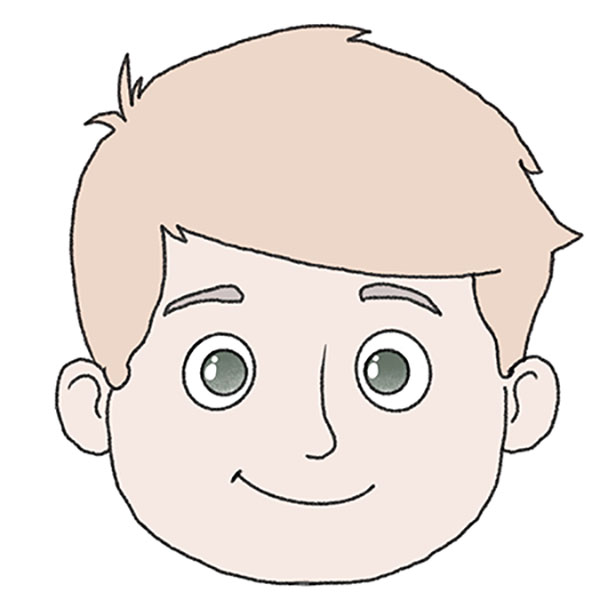
How to Draw a Cartoon Face
A cartoon face can show a clear emotion with only a few lines. In this tutorial on how to draw a cartoon face, you will practice placing simple features in a simplified way.
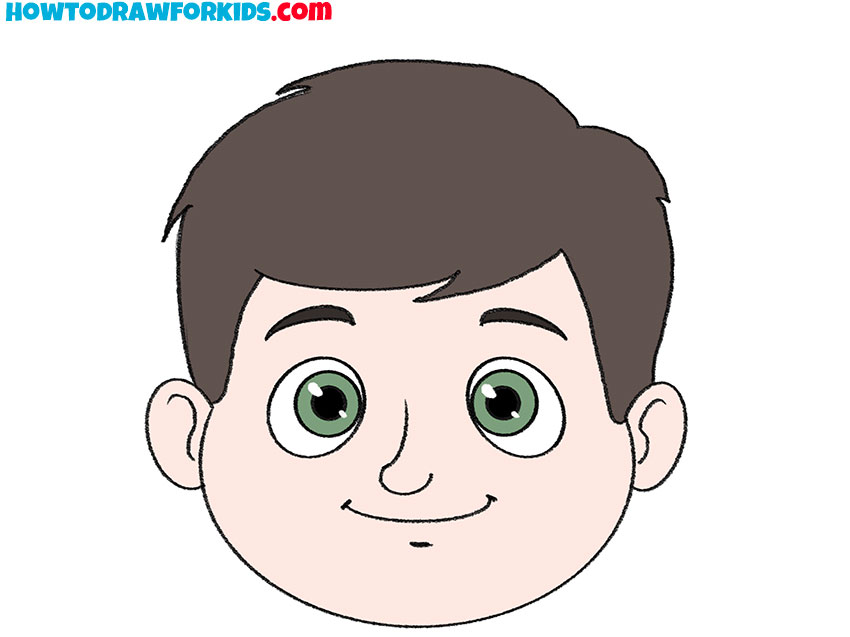
Prepare to Draw a Cartoon Face
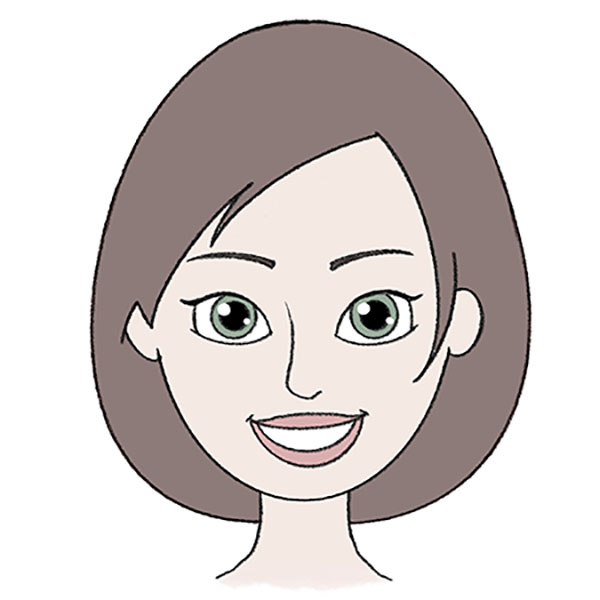
Cartoon faces allow more freedom than realistic portraits, but the main features still need to work together. The eyes should sit at the same height, and the nose should remain near the center of the face.
The large eyes make small placement errors more noticeable. If one eye sits higher than the other, the whole expression may appear tilted.
The outline is wide near the cheeks and narrower near the forehead.
This subject is useful for understanding how the eyes, eyebrows, and mouth affect an expression. The same idea will help when you draw a face with more natural proportions.
Cartoon Face Drawing Tutorial
Materials
- Pencil
- Paper
- Eraser
- Coloring supplies (brown, blue, and peach)
Time needed: 30 minutes
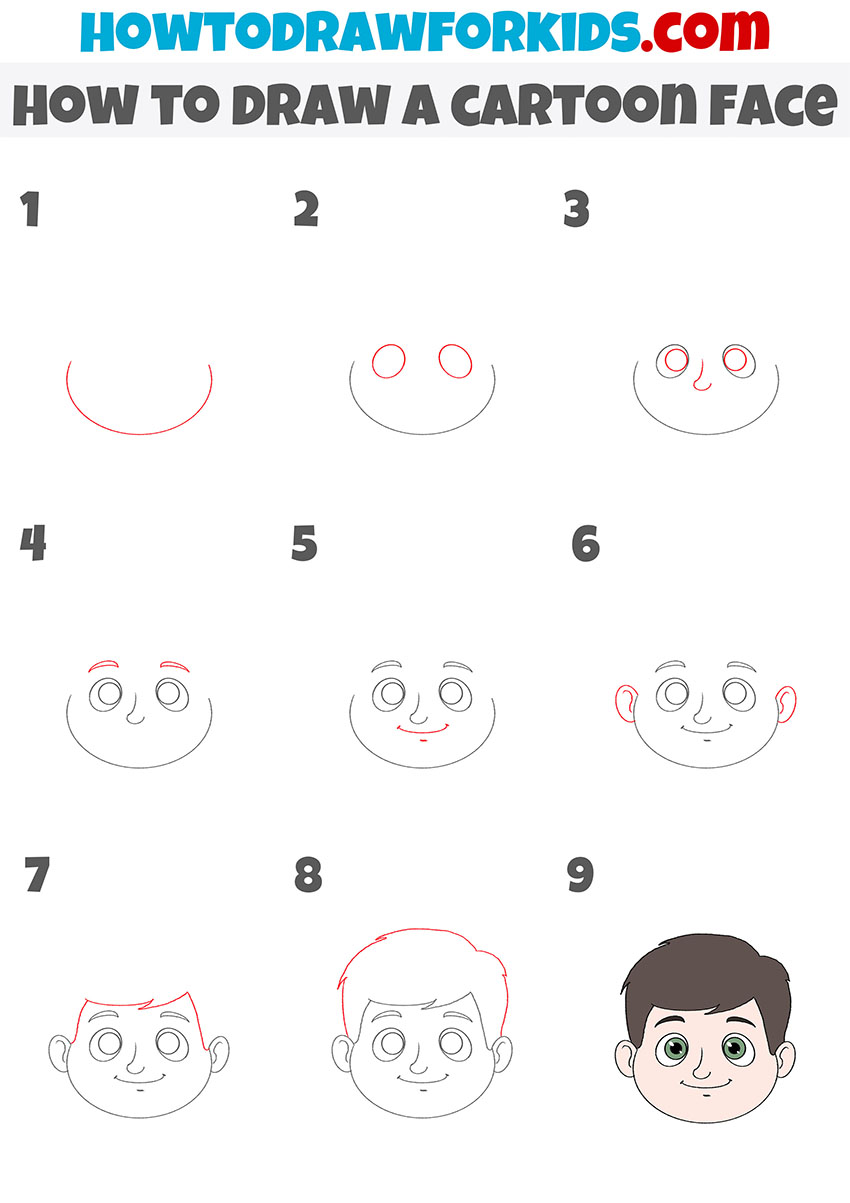
How to draw a cartoon face step by step
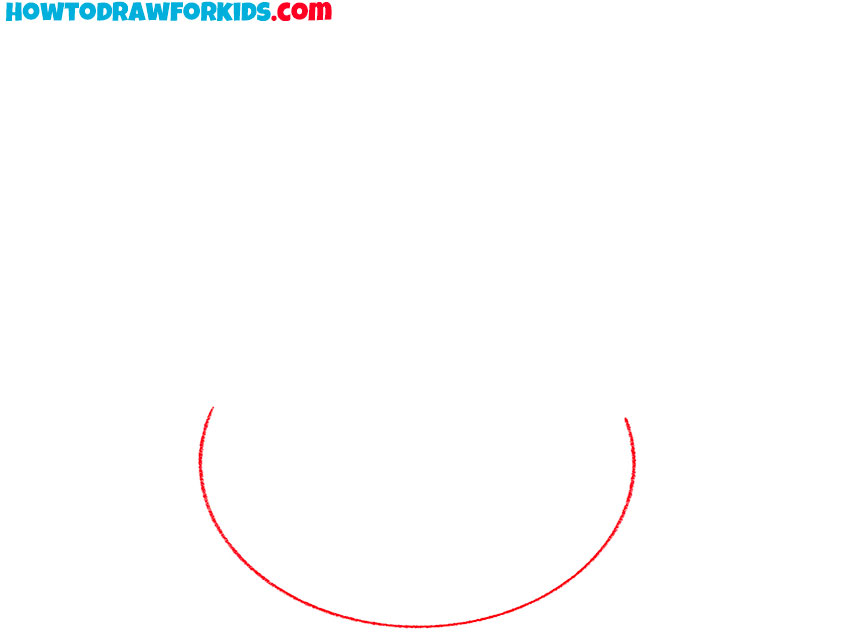
- Outline the lower part of the face.
Start with a long curved line for the cheeks and chin. Make the lower part of the cartoon face wide, and leave the upper edge open for the forehead and hair.
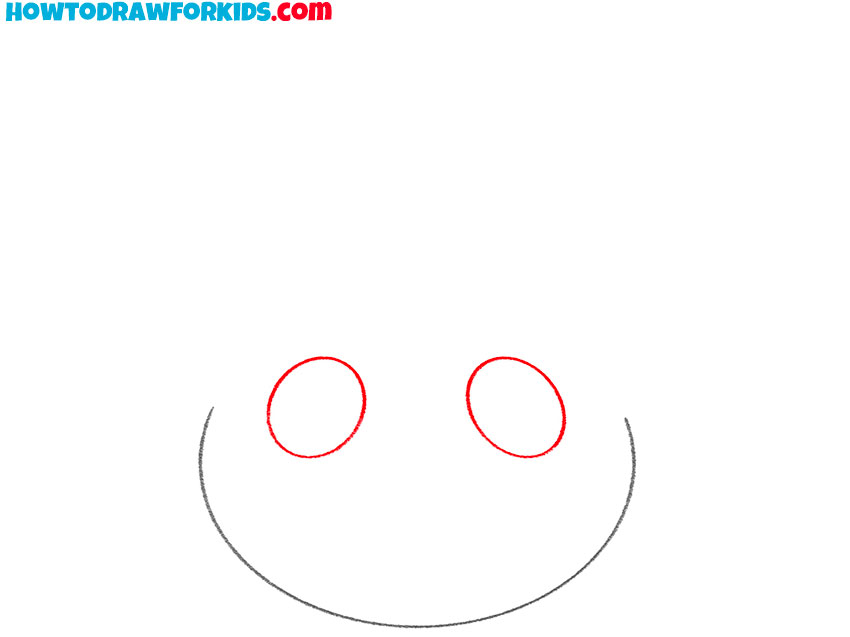
- Add the cartoon character’s eyes.
Place two vertical ovals near the center of the face. Draw them at the same height and leave a narrow space between them for the nose.
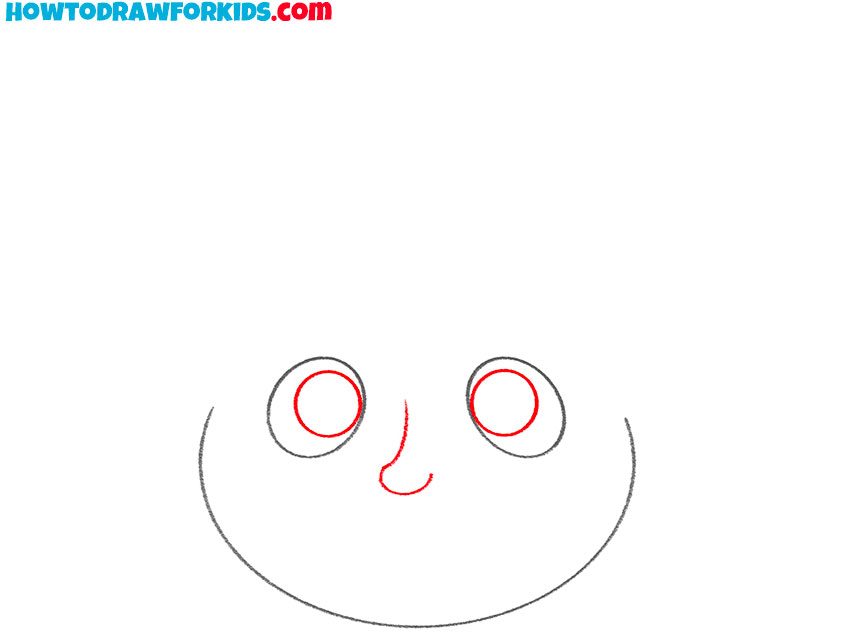
- Draw the irises and small nose.
Inside each eye, add a circular iris near the inner edge. Between the eyes, use one short curved line to form the cartoon character’s nose.
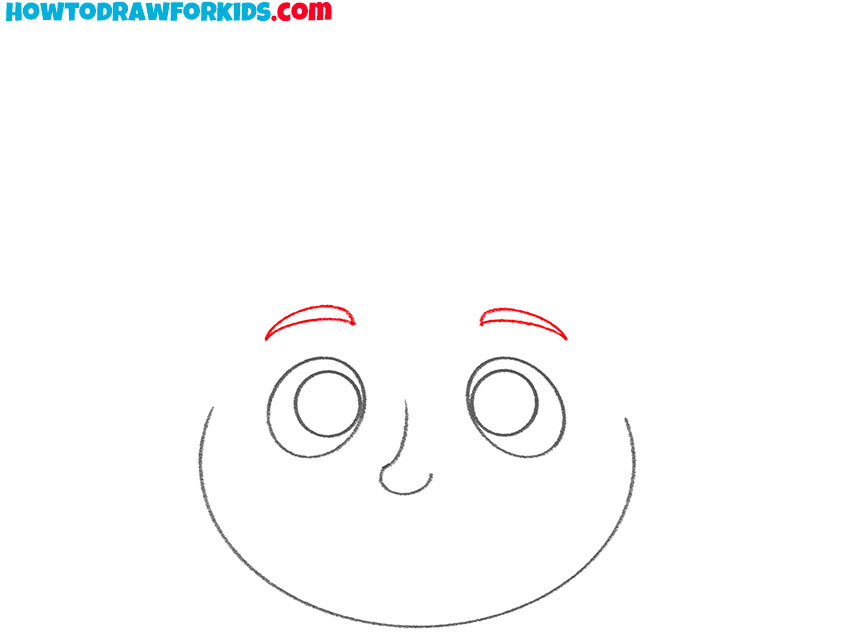
- Sketch the cartoon face eyebrows.
Above the eyes, add two short curved lines for the eyebrows. Place them at a similar height and raise their outer ends slightly to create a cheerful expression.
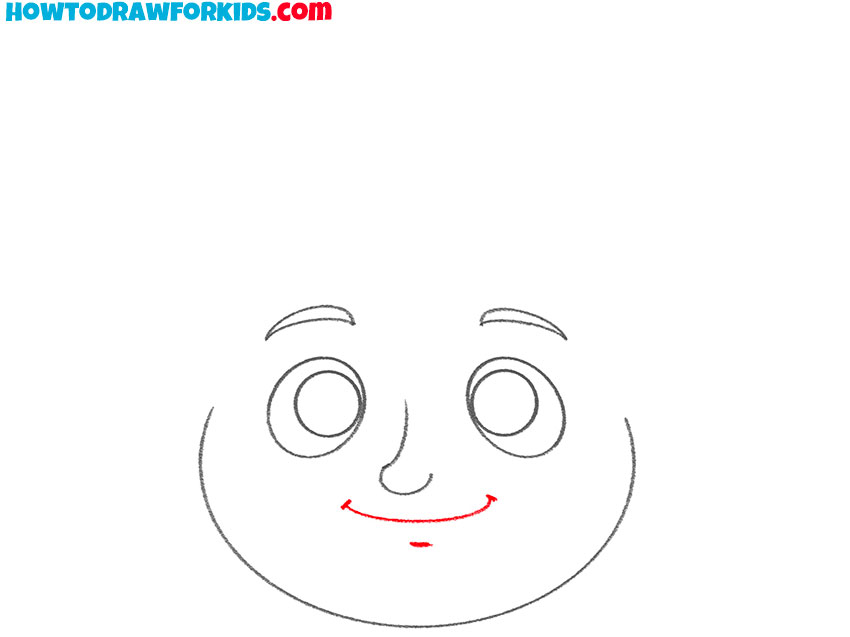
- Form the smiling mouth and chin crease.
Use a long upward curve to form the smiling mouth. Add a much shorter curved line below it for the crease under the lower lip.
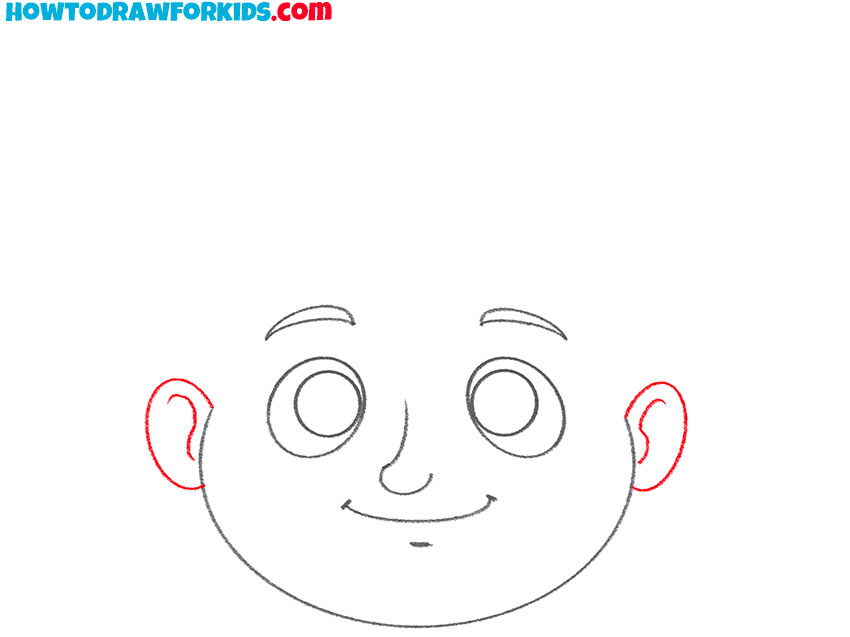
- Add ears beside the cartoon face.
On each side of the head, draw a small curved ear. Set the ears at about the same height as the lower half of the eyes and connect them to the face outline.
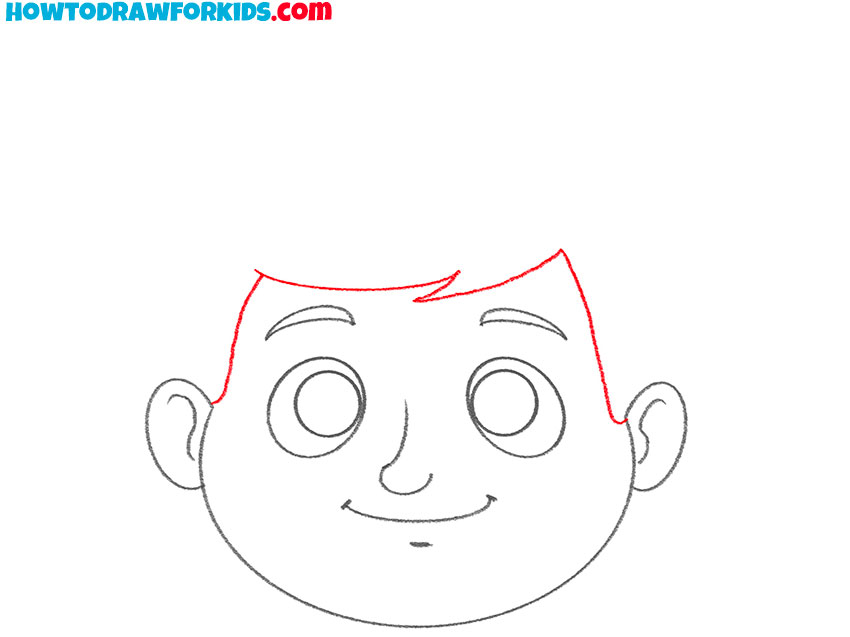
- Draw the hair above the forehead.
Sketch several curved locks across the open upper edge of the face. Change their length and direction slightly so the front of the hairstyle does not look stiff.
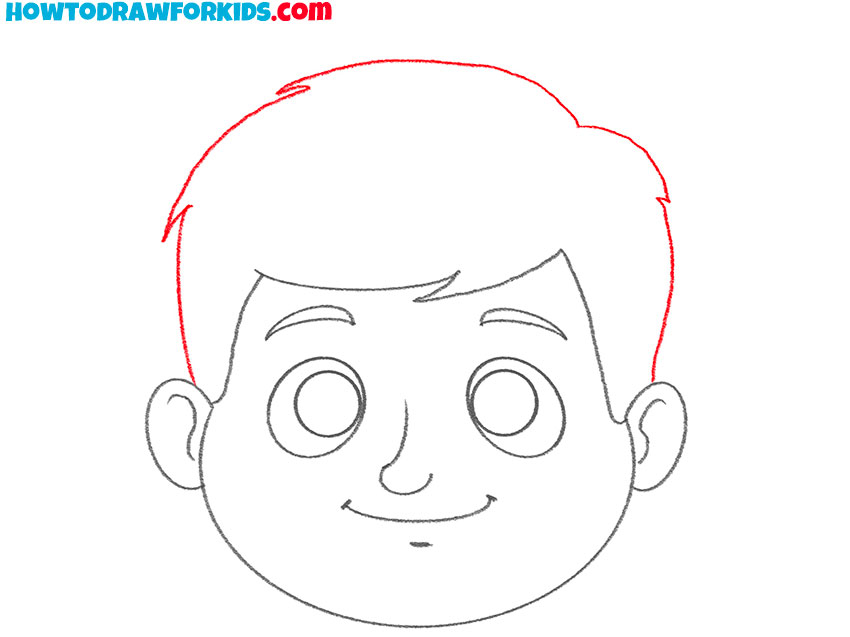
- Complete the cartoon character’s hairstyle.
Extend the hair above the forehead and around the sides of the head. Join the lines behind the ears to close the upper outline of the hairstyle.
- Color the cartoon face drawing.
Fill the hair with brown and use a light peach shade for the skin. Color the irises blue, then leave small white highlights inside the eyes.
Cartoon Face Drawing Printables
The free PDF includes the drawing steps, a coloring page, a tracing worksheet, and a grid exercise. You can save the file or print the pages for practice away from the screen.
More Ways to Draw a Cartoon Face
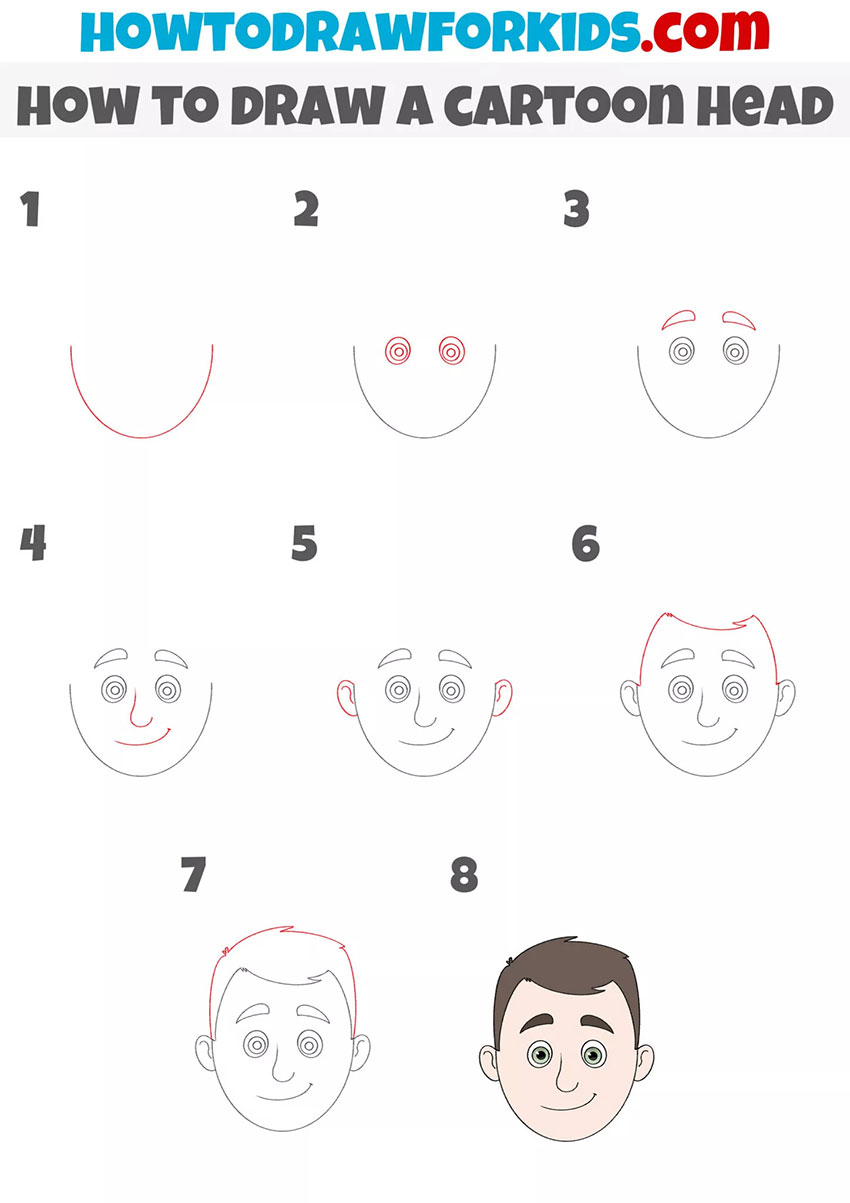
The next methods use different proportions and expressions. They are useful for seeing how changes to the jaw, eyes, and eyebrows can make a cartoon character appear older or more serious.
Adult Cartoon Face Tutorial
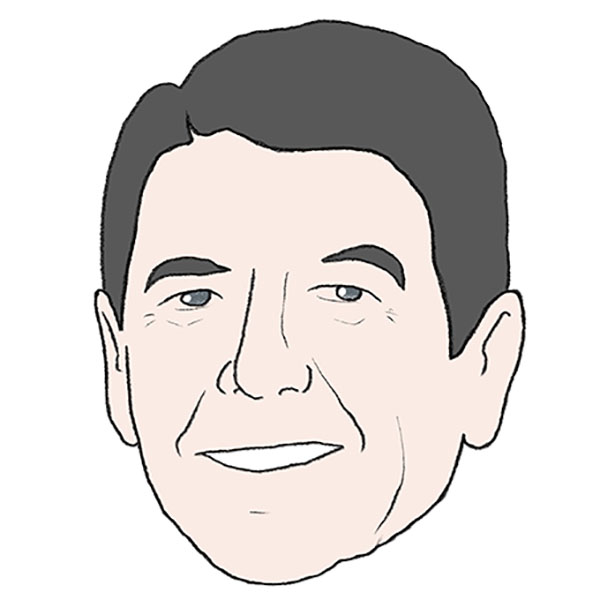
This version gives the character a longer face and a narrower cheek area. These changes make the head appear older than the wide-cheeked face in the main tutorial.
The eyes are narrower, and the upper eyelids are more visible. Notice how the eyebrows sit closer to the eyes. Most of the change in age comes from proportion rather than extra marks on the face.
Simple Cartoon Face Tutorial
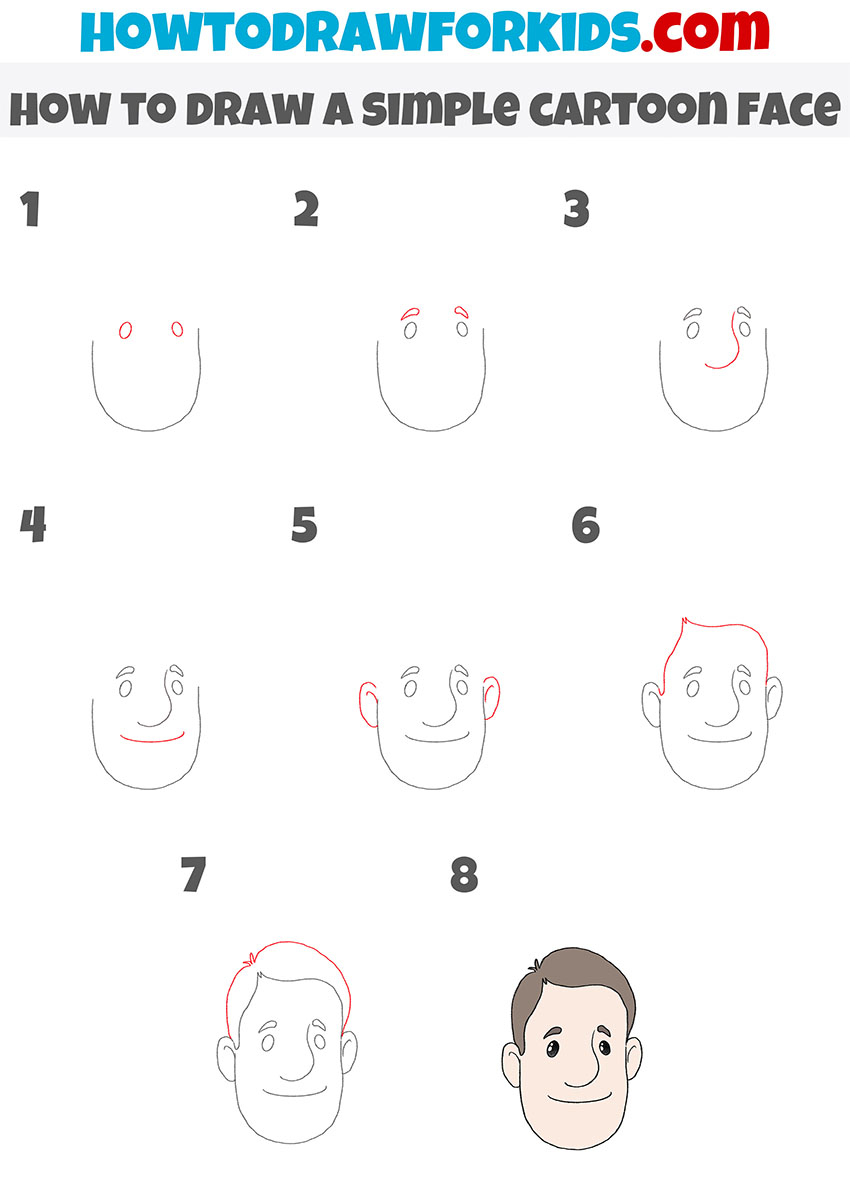
This method uses a narrower head and smaller facial features. The proportions give the character a different look without making the drawing more difficult.
The eyes sit farther apart and take up less space than in the previous versions. This leaves more room for the nose and makes the expression appear less exaggerated.
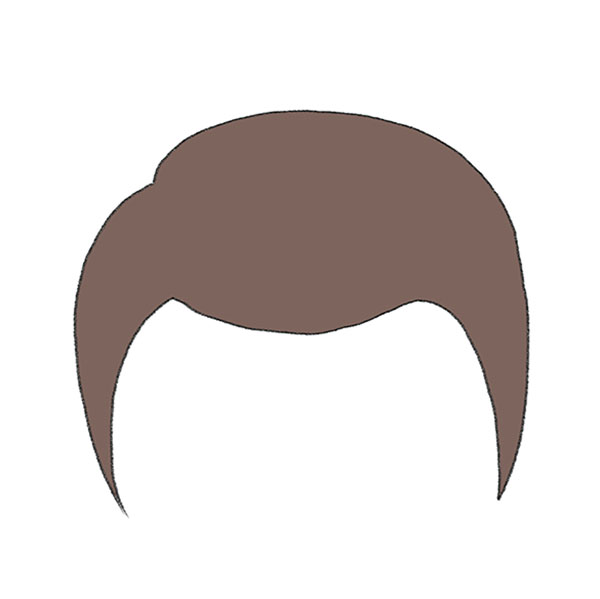
The hair closes the upper outline of the head and frames the forehead. Its uneven locks keep the hairstyle from looking like one solid shape.
Common Mistakes
A few placement errors can change the expression more than expected. Check the main features before adding the hair, since they are harder to adjust after the face is complete.
- Uneven feature sizes: If one eye is noticeably larger, the character may appear to be looking sideways.
- Misaligned eyes or ears: Features placed at different heights can make the head appear tilted.
- Too many facial lines: Extra creases can make a young cartoon character look older than intended.
- Weak expression: The angle of the eyebrows and the curve of the mouth should support the same emotion.
Small differences are part of a cartoon style, so the two sides do not need to be exact. Focus on the overall balance and make sure the expression reads clearly.
Conclusion
The large eyes are the strongest part of this cartoon face, so their size and position affect the whole drawing. Once they are placed evenly, the smaller features are easier to arrange.
You can change the character without redrawing the head. Lower the eyebrows for a serious expression, raise them for surprise, or change the curve of the mouth to show a different mood.
For more practice with facial proportions, try drawing a happy face or drawing a boy’s face. Each one uses a different balance between the eyes and the lower part of the head.
You can also use these ideas when you draw the Joker, where the mouth and eyebrows create a much stronger expression.