How to Draw a Fawn
This tutorial will show you how to draw a fawn, using a simple step-by-step method that makes sketching a young deer easy and enjoyable.
Prepare to Draw a Fawn
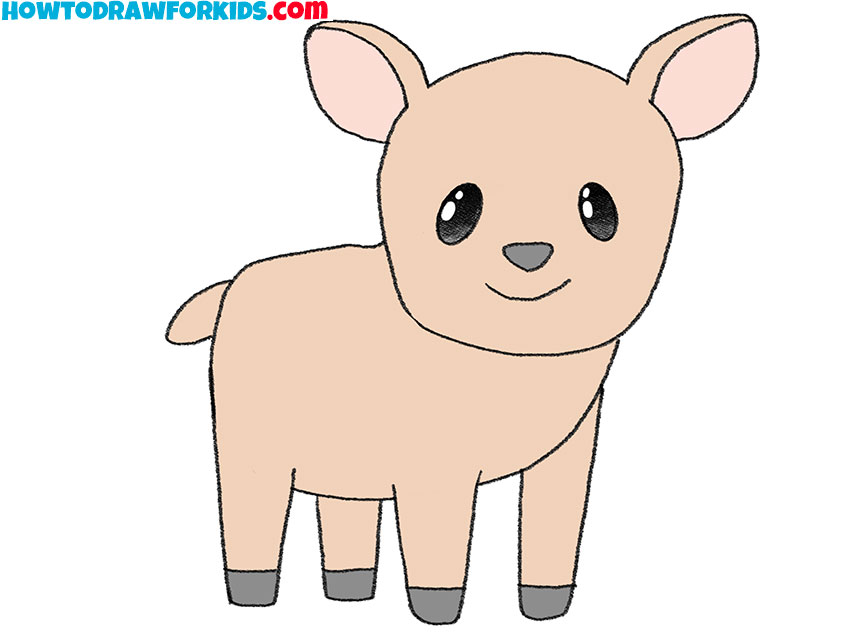
A fawn is very different from an adult deer. It has a smaller body and a larger head. In this tutorial, I’ll show you how to draw a fawn while keeping those features simple and easy to sketch.
If you’ve already completed my deer drawing tutorial, you’ll notice that this one uses a different set of proportions.
At the end of the step-by-step guide, I’ll give you a few ideas for changing the drawing and adding extra details to make it your own.
Easy Fawn Drawing Tutorial
Materials
- Pencil
- Paper
- Eraser
- Coloring supplies
Time needed: 30 minutes
How to Draw a Fawn
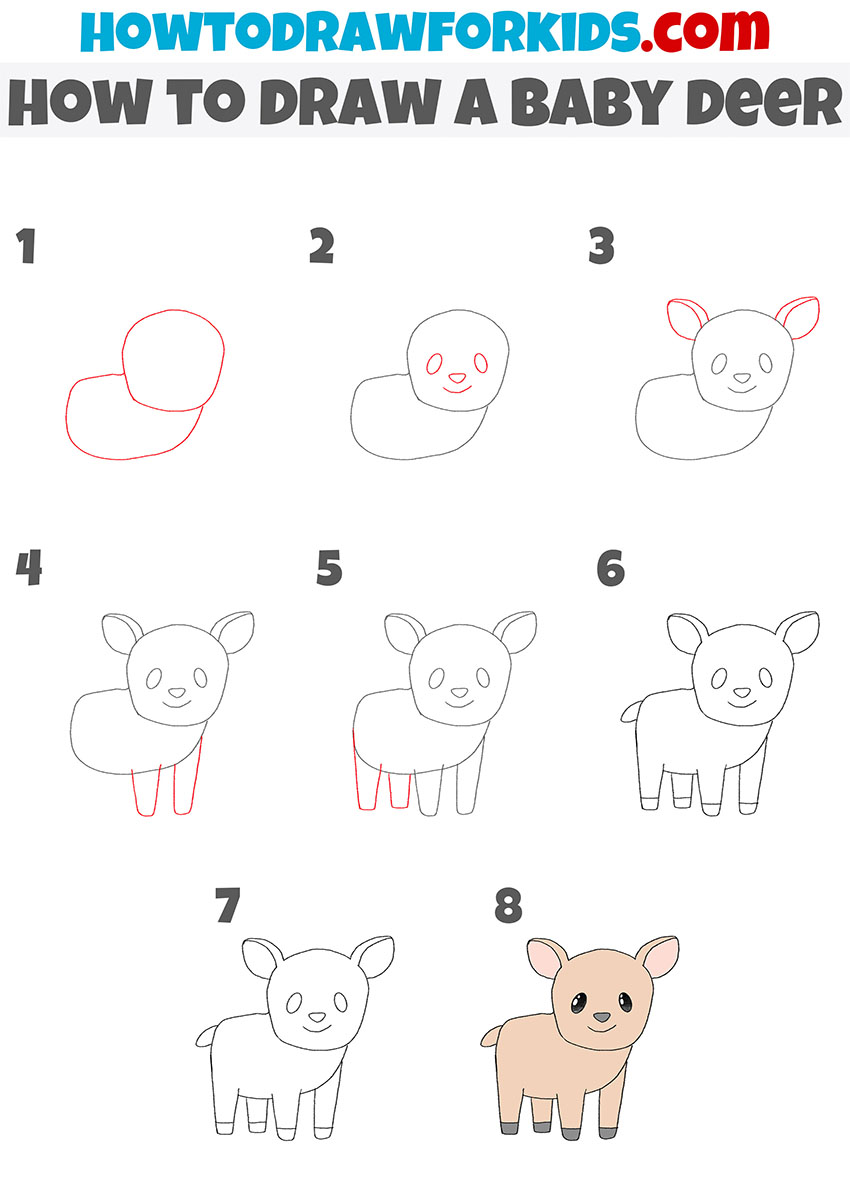
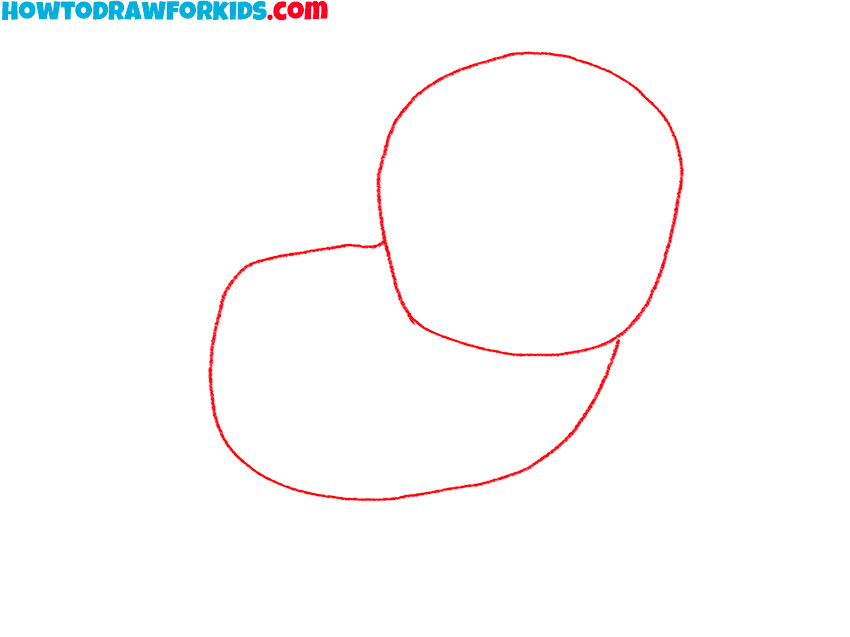
- Draw the head and torso.
Begin by drawing two overlapping shapes, a circle for the deer’s head and a larger oval for the body, ensuring the proportions reflect a fawn’s delicate structure. Place this in the center of your piece of paper.
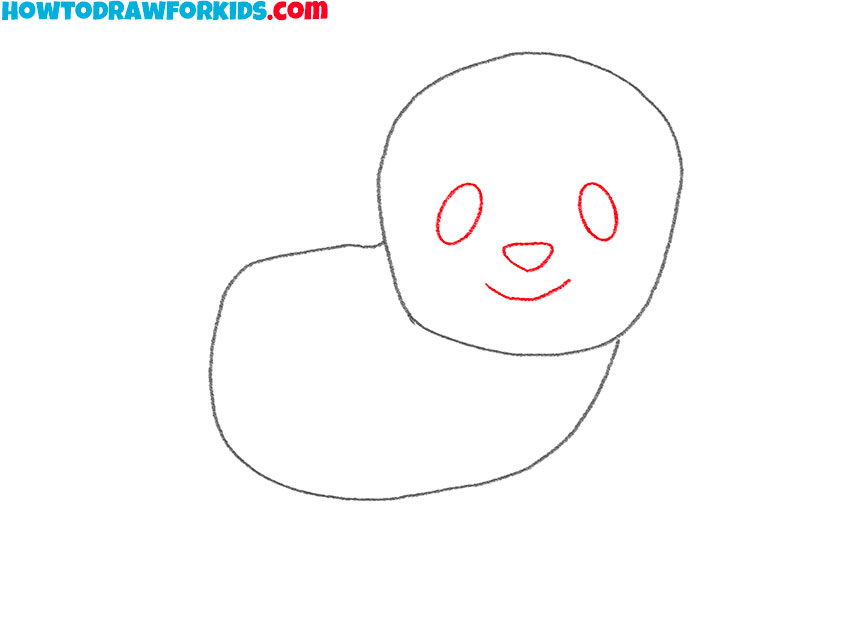
- Add elements of the muzzle.
So, sketch the facial features starting with two dots for the eyes, a small triangle for the nose, and a curved line for the mouth to capture the fawn’s gentle expression. As you can see, very simple geometric shapes can form a vibrant and realistic facial expression.
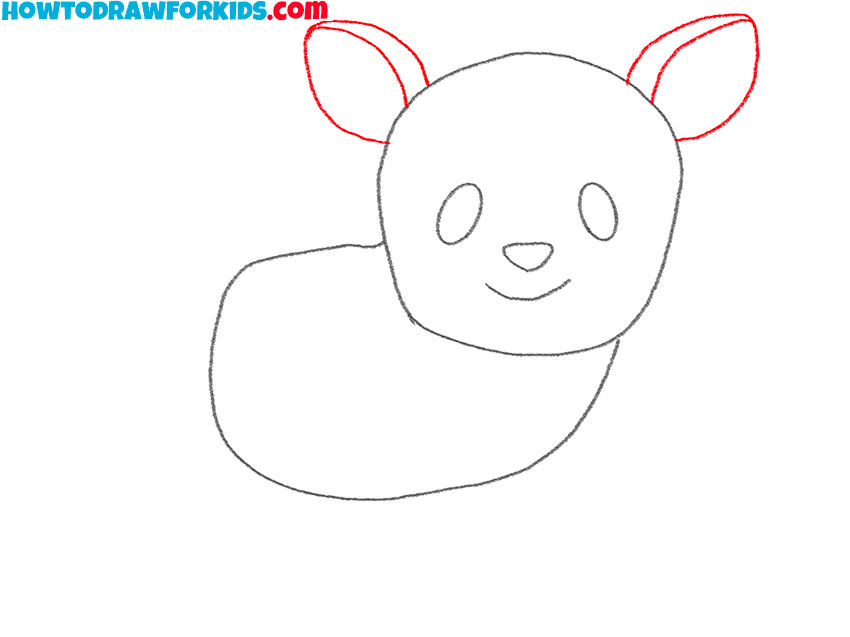
- Depict the ears.
Add the ears by adding two leaf-shaped figures on top of the head, with inner lines to suggest the inner ear detailing. Cartoon animals with large ears always look a little ridiculous and funny.
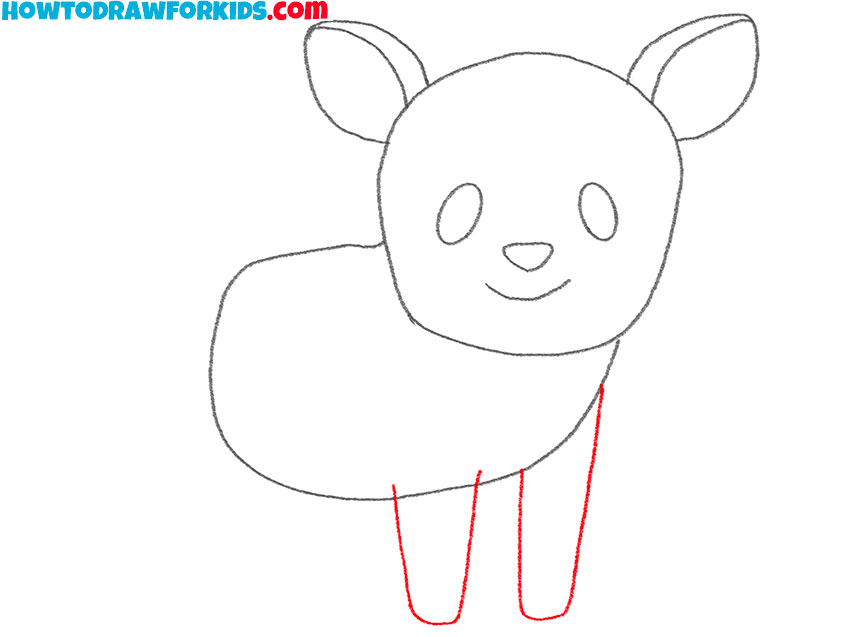
- Sketch out the front legs.
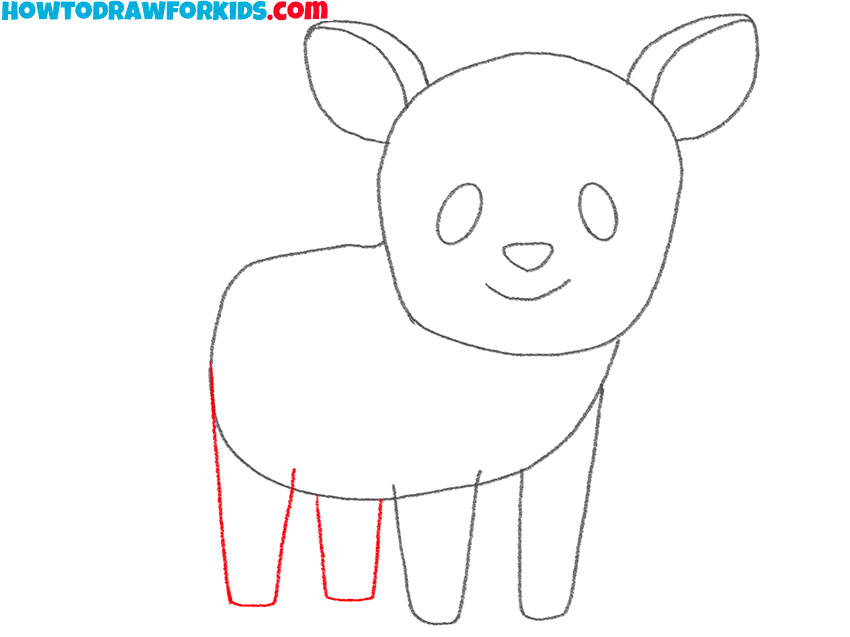
Draw the front legs with two sets of parallel lines descending from the body, slightly tapering as they reach the hooves. The front part of the fawn’s body slightly hides the leg closest to us. Because of this, the legs look asymmetrical.
- Draw the hind legs.
Outline the fawn’s back legs with a gentle curve at the top, moving into straight lines towards the hooves, giving the stance stability and a sense of rest.
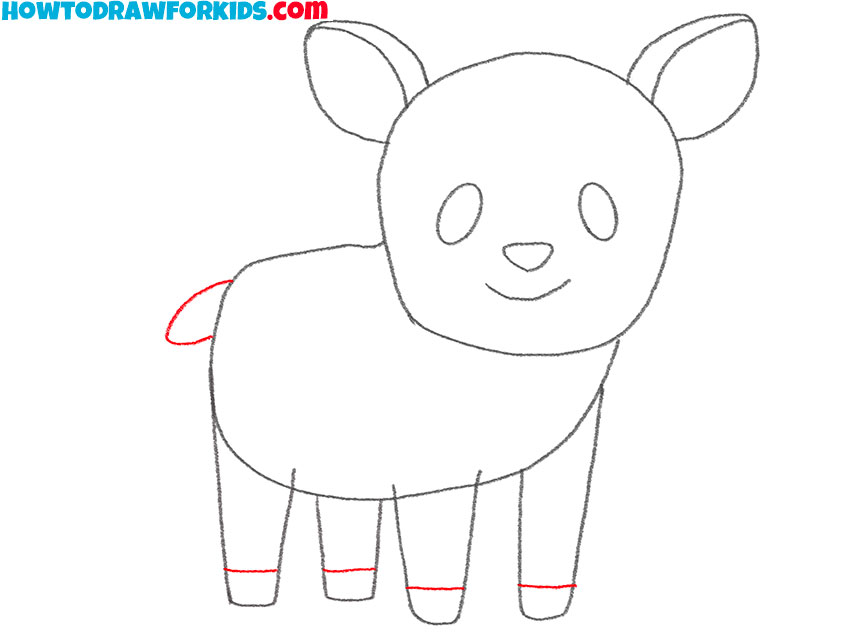
- Add the hooves and tail.
Our fawn has a very small, short tail. Try to draw exactly the shape and size of the tail so that the fawn really looks like a baby animal. The second action of this step is hooves, which is even more simple.
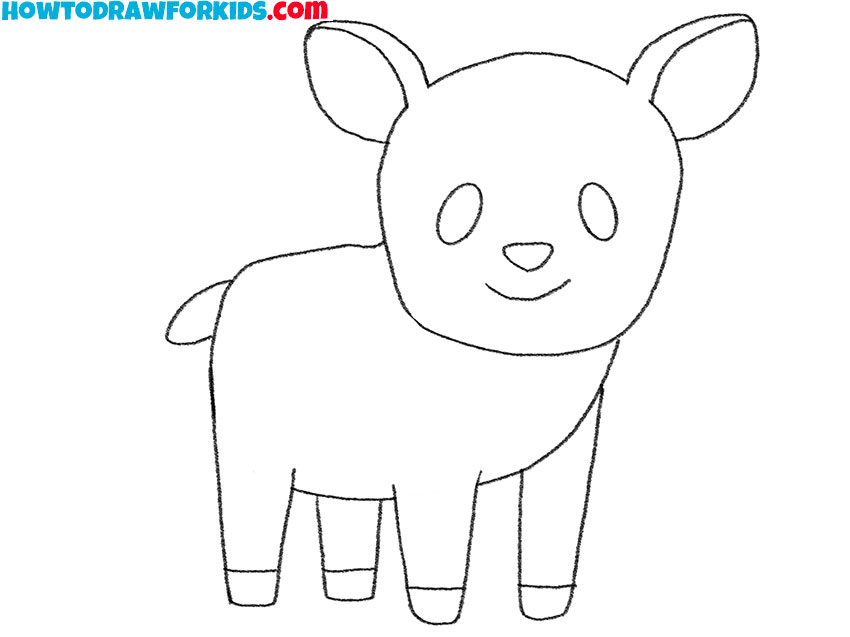
- Correct inaccuracies.
So, it should look like a cute, funny deer with a large head, a small body and a funny face. Check your drawing, find any inaccuracies and fix it. Next up is coloring.
- Color the drawing.
The entire design, with the exception of the eyes, can be painted in solid colors. You can choose any colors for this fawn’s fur. However, the inner parts of the ears look great in pink. Don’t forget about the highlights inside the eye contours.
Additional Content
I’ve also prepared a free PDF version of this fawn drawing tutorial. It includes the main drawing steps in a simplified format, along with a coloring page, tracing worksheet, and grid drawing worksheet. You can download it for free and use it anytime, even without an internet connection.
Improve Your Fawn Artwork
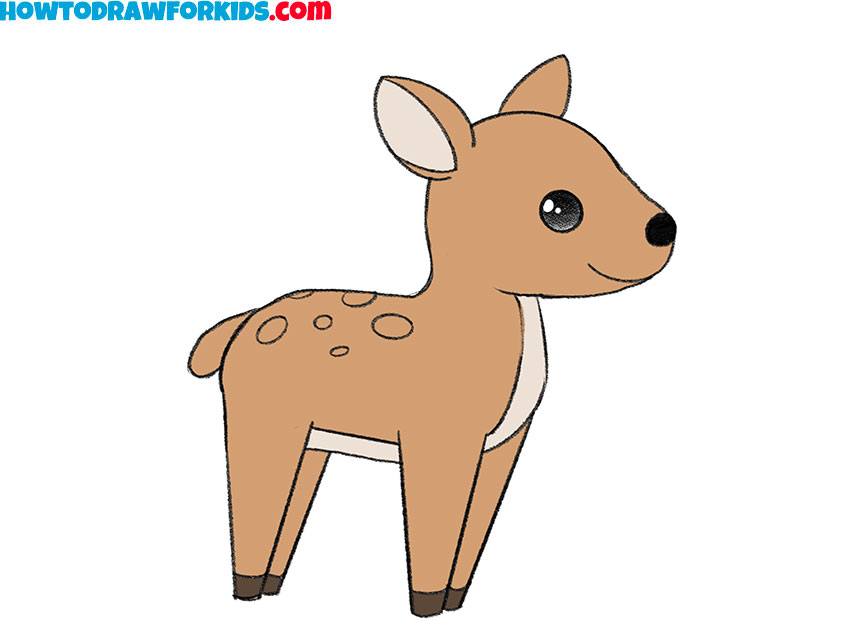
A few small details can make your fawn look much more natural. Try looking at reference photos to see how young deer stand, where the white spots are placed, and how the legs and head are proportioned.
These observations will help you make the fawn drawing more convincing.
Pay attention to the fur as well. Instead of drawing every hair, use short, light pencil strokes to illustrate the texture.
When adding the spots, don’t place them in perfect rows. Small differences in size and spacing will make them look much more natural.
You can also change the pose, turn the head in a different direction, or draw the fawn standing, sitting, or lying down. Once you understand the basic construction, creating your own variations becomes much easier.
What’s Next?
Now that you’ve finished your fawn drawing, you can continue practicing with other animals. Try my moose drawing tutorial if you’d like to draw a larger forest animal, or follow the goat drawing guide to compare different body shapes and horns.
Each tutorial teaches a different approach and helps you build your drawing skills.
I also share new drawing guides on social media, so feel free to follow along if you’d like to see future tutorials. If there’s another animal or any other subject you’d like me to draw, leave a comment below.
Your suggestions often inspire new tutorials and coloring pages.